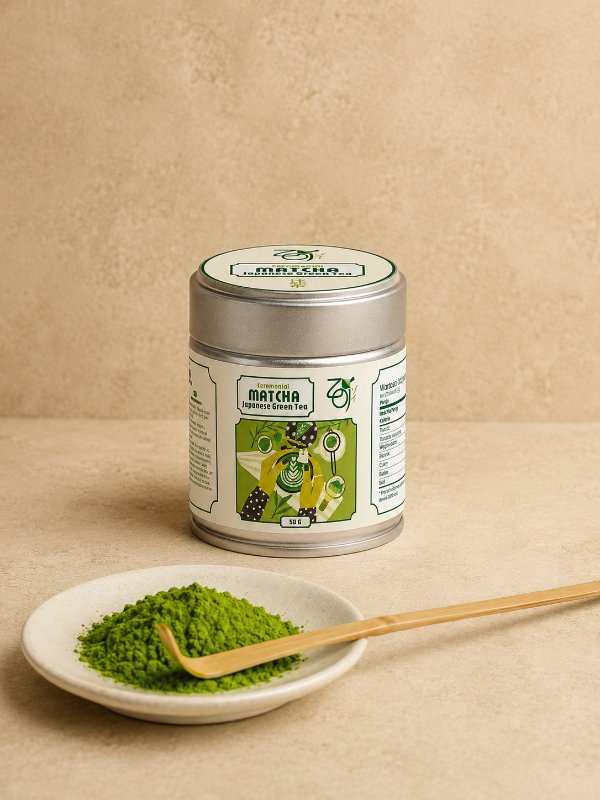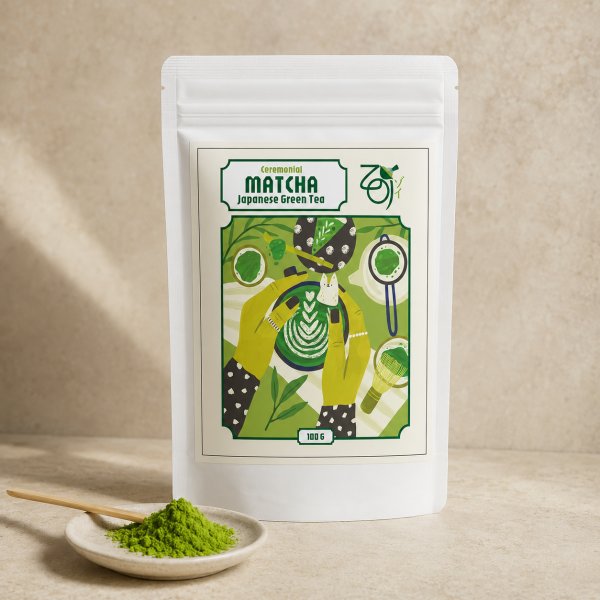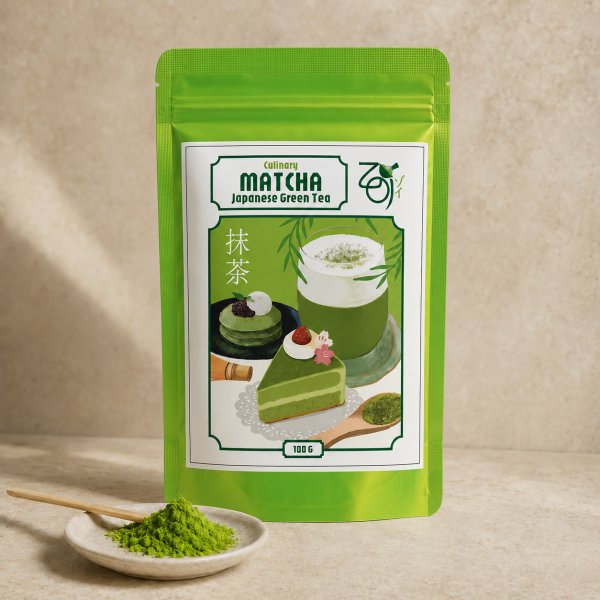
Good ceremonial matcha costs around €15–45 for 30–50 g in Ireland and the rest of the eurozone, which works out at roughly €0.60–3.00 per cup. Culinary matcha is cheaper — around €10–25 for 100 g — because it comes from a later harvest. Well below these prices, you’re almost always paying for something other than you think: a late harvest, a coarser grind, or tea that’s been sitting in a warehouse for a year.
What you’re actually paying for
The price of matcha comes down to four things, and none of them is marketing.
Harvest. The first spring harvest gives the youngest leaves, the most amino acids and the least bitterness. The second and third harvests are cheaper to produce and taste less sweet.
Shading. Three to four weeks under shade mats means a smaller yield from the same field. The buyer pays for that loss — and gets umami and colour in return.
Grinding. Stone mills grind around 40 g an hour. A ball mill does the same in a minute, but it heats the powder and spoils the aroma. You see the difference in the price and taste it in the cup.
Freshness. Matcha doesn’t mature; it only ages. Tea that has spent half a year on a pallet is cheaper and noticeably worse.
How much does one cup cost?
This is the only figure that really lets you compare offers. A serving is 2 g, so a 100 g tin gives you 50 cups and a 30 g tin fifteen. A 100 g tin at €25 works out at €0.50 per cup. The same €25 for 30 g comes to €1.67 per cup. The price on the tin can mislead; the price per cup can’t.
By way of comparison, a matcha latte costs €4.50–6.50 in a Dublin café, and about the same in other big eurozone cities. Even good ceremonial matcha whisked at home usually costs a fraction of that.
When cheap means bad
Not always. Culinary matcha is cheaper for technical reasons, not because of its quality — a later harvest and a coarser grind give it a stronger, bolder flavour, which in a latte is an advantage rather than a flaw. Buying ceremonial matcha for lattes is the most common way to overpay.
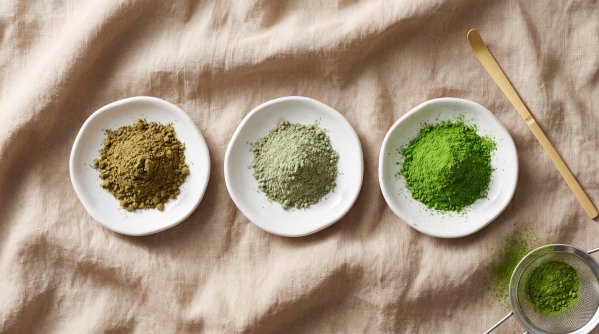
What you should be wary of is something else: matcha with no harvest or country of origin stated, sold in clear packaging, and more khaki than green. These are usually signs that you’re paying the normal price for old or late-harvest tea.
How to tell if the price is fair
The seller states the weight and can tell you whether the matcha is meant for drinking straight or for lattes.
The packaging is opaque and airtight — light and moisture spoil matcha faster than time does.
The colour is bright green, not olive or yellowish.
The price per cup falls within the range at the start of this article, or slightly below it for a larger tin.
How much to spend to start with
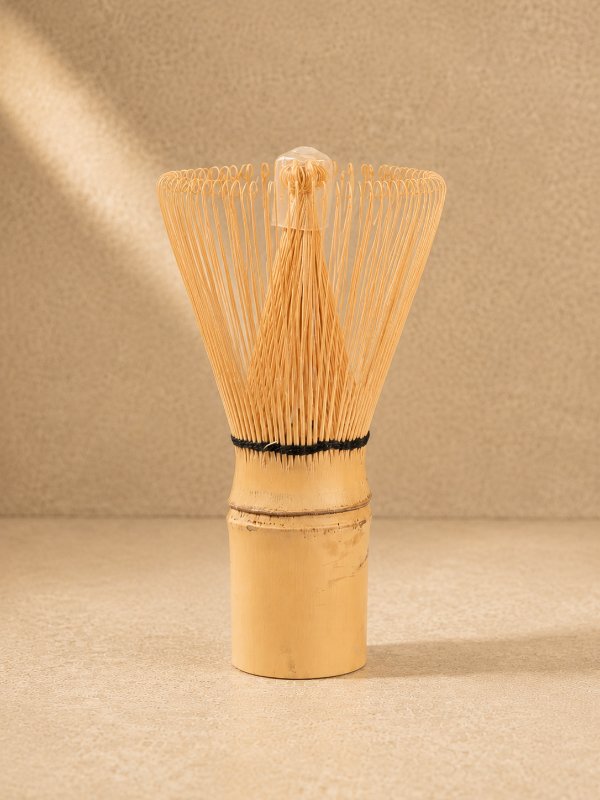
There’s no point buying the biggest tin first time round. Thirty to fifty grams is enough for two to three weeks of daily drinking and lets you find out whether you like the taste at all. If you mainly drink lattes, start with culinary matcha; if you want to drink it with just water, start with ceremonial matcha. You’ll also need a chasen — without one, even expensive matcha ends up lumpy.
If you’re not sure where to start, this guide to your first choice will help you decide.
Frequently asked questions
How much should good matcha cost?
Ceremonial matcha costs around €15–45 for 30–50 g, culinary matcha around €10–25 for 100 g. That works out at roughly €0.60–3.00 per cup for ceremonial and €0.20–0.50 for culinary. Well below these prices, you’re usually buying a later harvest or older tea.
Why is matcha more expensive than ordinary green tea?
Because shading reduces the yield, the best first-harvest leaves are often picked by hand, and a stone mill takes an hour to grind 40 grams. On top of that, you consume the whole leaf, so one gram of matcha replaces far more grams of tea leaves.
Is more expensive matcha always better?
No. In a latte, pricier ceremonial matcha does worse than cheaper culinary matcha, because its subtleties are lost in the milk. The price reflects the quality of the leaf, not whether it suits the way you drink it.
How many cups will you get from 100 g of matcha?
About fifty, at 2 g a serving. For a latte, where you’d usually use 3 g, you’ll get roughly thirty-three.
Is supermarket matcha worth buying?
Sometimes, but it’s rarely cheap per cup: most supermarket matcha comes in small 30 g packs, and gram for gram it often costs twice as much as good culinary matcha. Check the weight and the colour before you compare prices on the shelf.
Is it worth buying matcha by weight?
Rarely. Matcha oxidises on contact with air and light, and selling it by weight means a large pack gets opened again and again. Here the airtight tin is part of the product, not an afterthought.