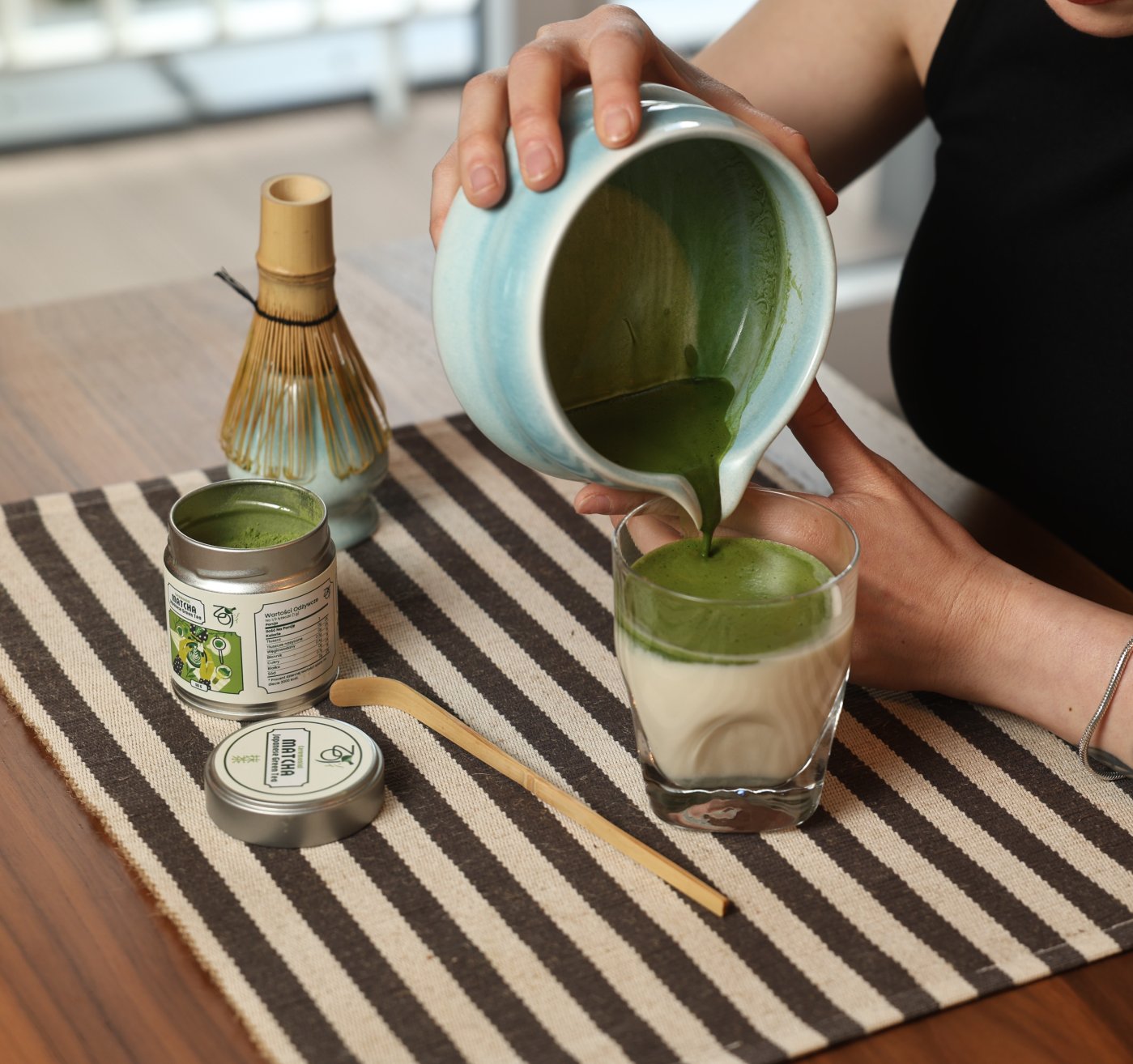
Choosing your first matcha can seem tricky, as shops are full of terms like ‘premium’, ‘super premium’, ‘grade A’ and ‘ceremonial blend’. But really, the decision is a simple two-step process that takes just a minute.
Question 1: how will you drink it?
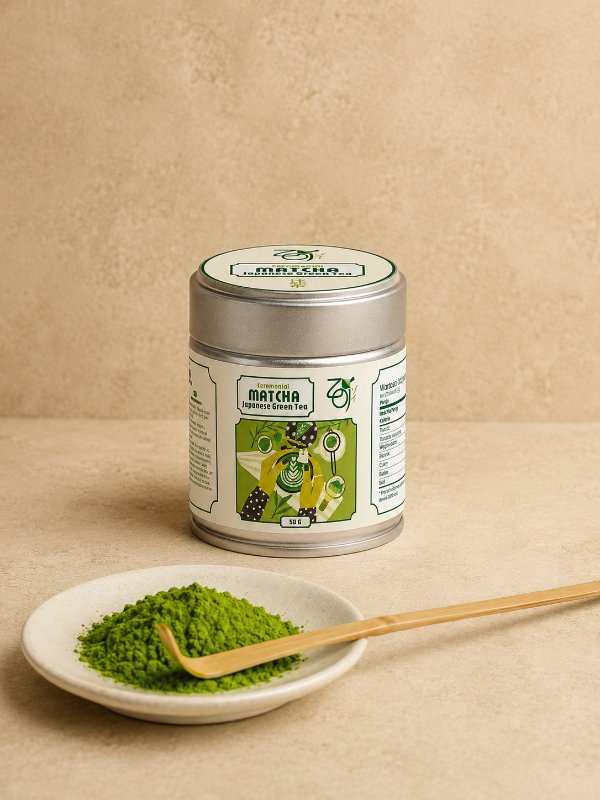
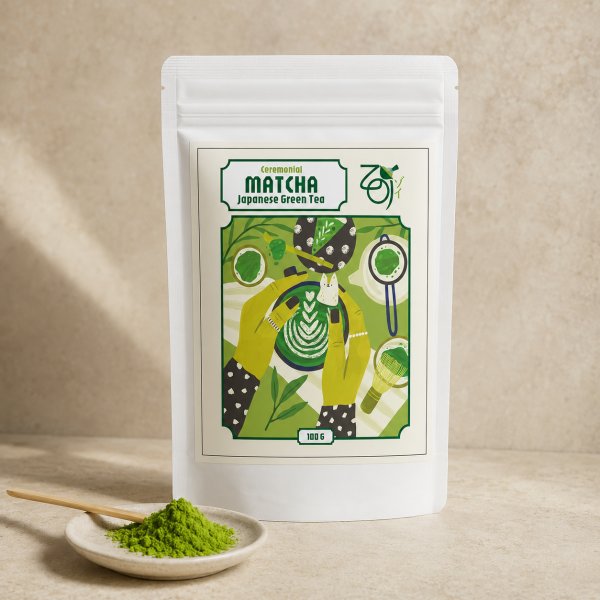
With just water, or in a latte where you want to taste the tea – go for the ceremonial blend. First flush, pure leaf pulp, stone-ground. With just 60 ml of water, there’s nowhere for any compromise to hide, so there can be no compromises.
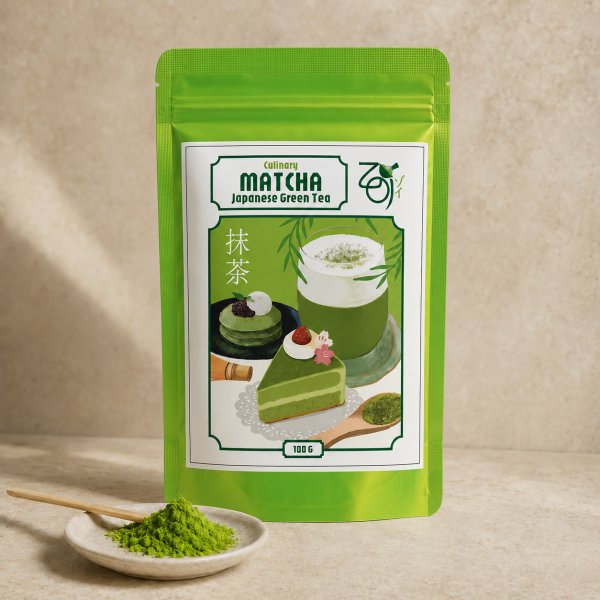
For sweet lattes, smoothies, porridge and baked goods — go for the culinary variety. Its stronger, more robust profile cuts through the milk and sugar where the ceremonial variety simply fades away. Paying for the first harvest only to bury it in a cake is like throwing the price difference straight into the bowl.
Not sure which way to go yet? Start with the culinary 100 g. It’s more forgiving, costs less, and if you get hooked on drinking it with water — the ceremonial will be a conscious second purchase, not a blind first one.
Question 2: do you have something to froth it with?
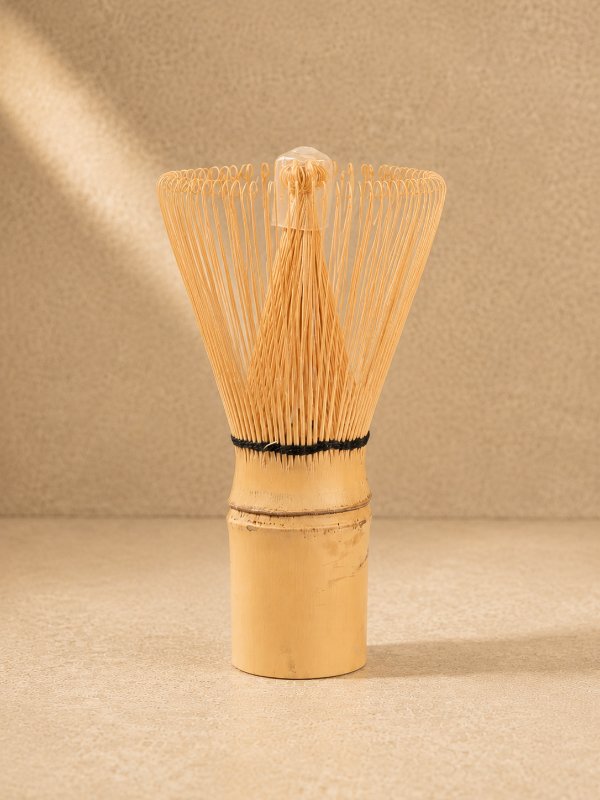
For lattes and everyday use, a vigorous shake in a jar or a milk frother will do. For drinking with water, a chasen is irreplaceable — a fork leaves lumps, and a frother breaks up the powder but doesn’t create that thick, velvety foam that transforms the whole texture. If you know from the start that you’re aiming for a classic bowl, a starter set with a chasen works out cheaper than buying one a week later.
Pack size: 100 or 200?
Unsealed matcha stays at its best for 4–8 weeks. One bowl a day is 2 g — 100 g will last just under two months, perfectly within the freshness window. Go for 200 g if there are two of you drinking it or if you’re making a daily latte using 3–4 g. Stocking up on a tea that relies on its colour and aroma actually works against you.
What not to do when starting out
- Don’t start with koicha. Thick matcha has an intensity that can come as a shock if you’re not used to the umami flavour. It dries out first.
- Don’t buy based on the colour in a photo. Photos are often colour-enhanced. Buy based on the harvest description and whether the seller even distinguishes between the intended uses of the powders.
- Don’t be swayed by the word ‘premium’. It’s not a standard — it means exactly whatever the manufacturer wants it to mean. The harvest, the part of the leaf, the grinding method: these three things are verifiable.
And one last thing, to be honest: the difference between good and exceptional matcha is real, but smaller than the difference between fresh and stale. It’s better to drink good, fresh matcha regularly than to treat yourself once a month to an expensive one that has already lost its flavour.