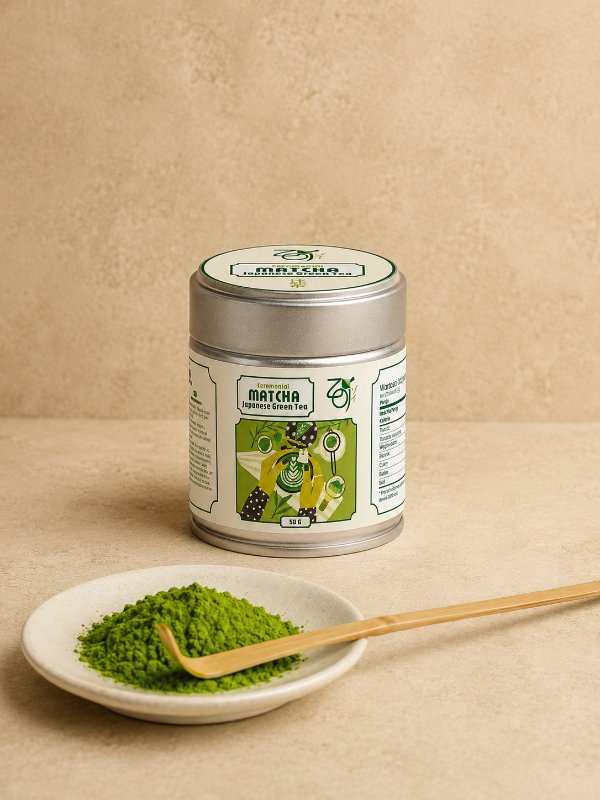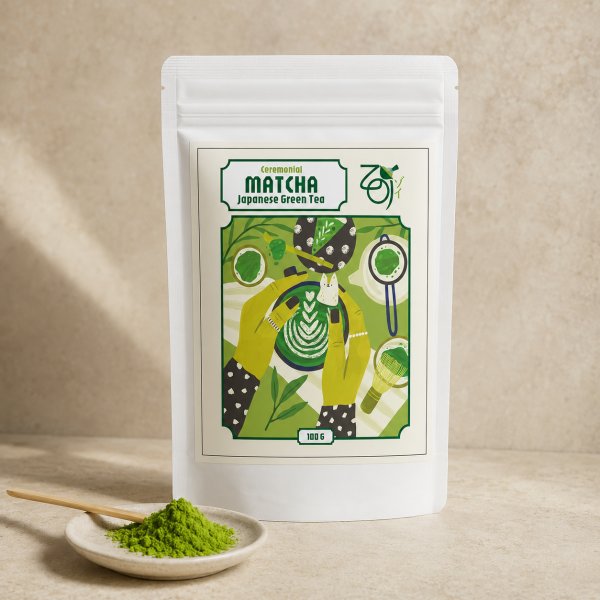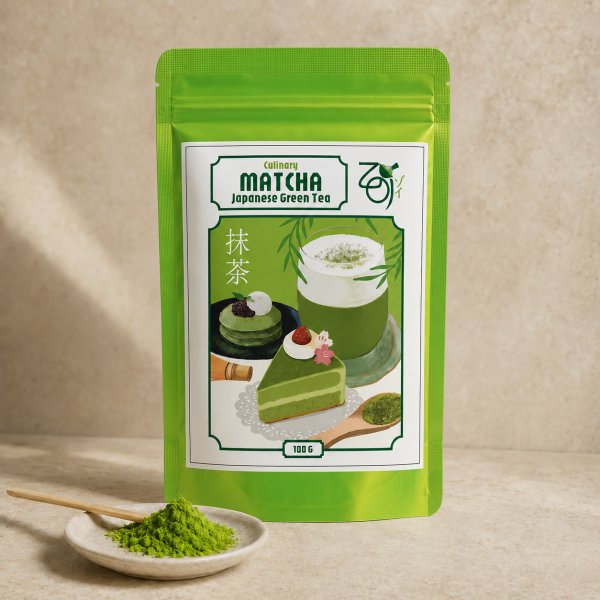
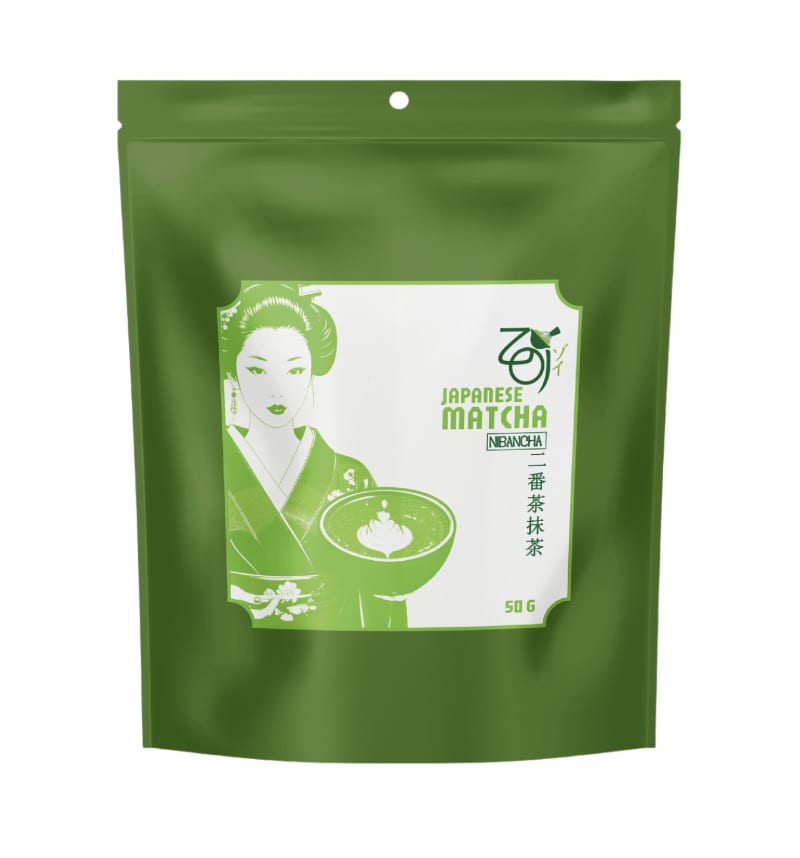
Matcha is the finest form of tea you can buy. The leaf, ground into a powder with particles measuring just a few microns, has a huge surface area in contact with the air — and everything of value in it oxidises at breakneck speed. The good news is that protecting it is simple and requires no special equipment.
Four enemies
Oxygen. The main culprit. It oxidises chlorophyll and catechins — the colour fades from bright green to olive, then to mustard, and the flavour becomes flat and hay-like. That’s why, every time you open the packet, you should squeeze the air out before resealing it.
Light. Chlorophyll breaks down in the light — it’s the same process that causes herbs on a windowsill to turn yellow. Matcha should be stored in an opaque container, in a cupboard, not on the worktop.
Moisture. The powder absorbs moisture from the air instantly. Damp matcha clumps into hard lumps that no sieve can break up, and it loses its aroma. Scoop it out with a dry teaspoon — never the one you’ve just used to stir your milk.
Heat. It accelerates all three processes at once. The cupboard next to the oven is the worst place in the whole kitchen.
The fridge — yes, but on one condition
Unopened matcha keeps perfectly fresh in the fridge. The problem starts when you take it out: moisture from the warm air condenses on the cold powder. That’s why the golden rule is that the packet must be allowed to reach room temperature before you open it. Half an hour on the worktop is enough. Once opened and used daily, it’s better to simply keep your matcha in a cool, dark cupboard and drink it up quickly.
How long does matcha actually last?
- Unopened — easily until the date on the packet, usually one year from grinding.
- Once opened — at its best for 4–8 weeks. After that, it doesn’t become harmful, just increasingly bland.
- Test without a best-before date: if it’s bright green and has a sweet, grassy smell — drink it with water. If the colour leans towards olive and the aroma is weaker — use it in lattes and baked goods, where the difference is lost. If the colour is mustard-yellow and it smells of hay — this matcha is now only suitable for cakes, and even then, out of pity.
A practical tip when buying: if you drink one cup a day, 100 g will last six to seven weeks — right within the peak freshness window. A 200 g supply makes sense for two people in the house or for a daily latte, not as a ‘just in case’ stock.