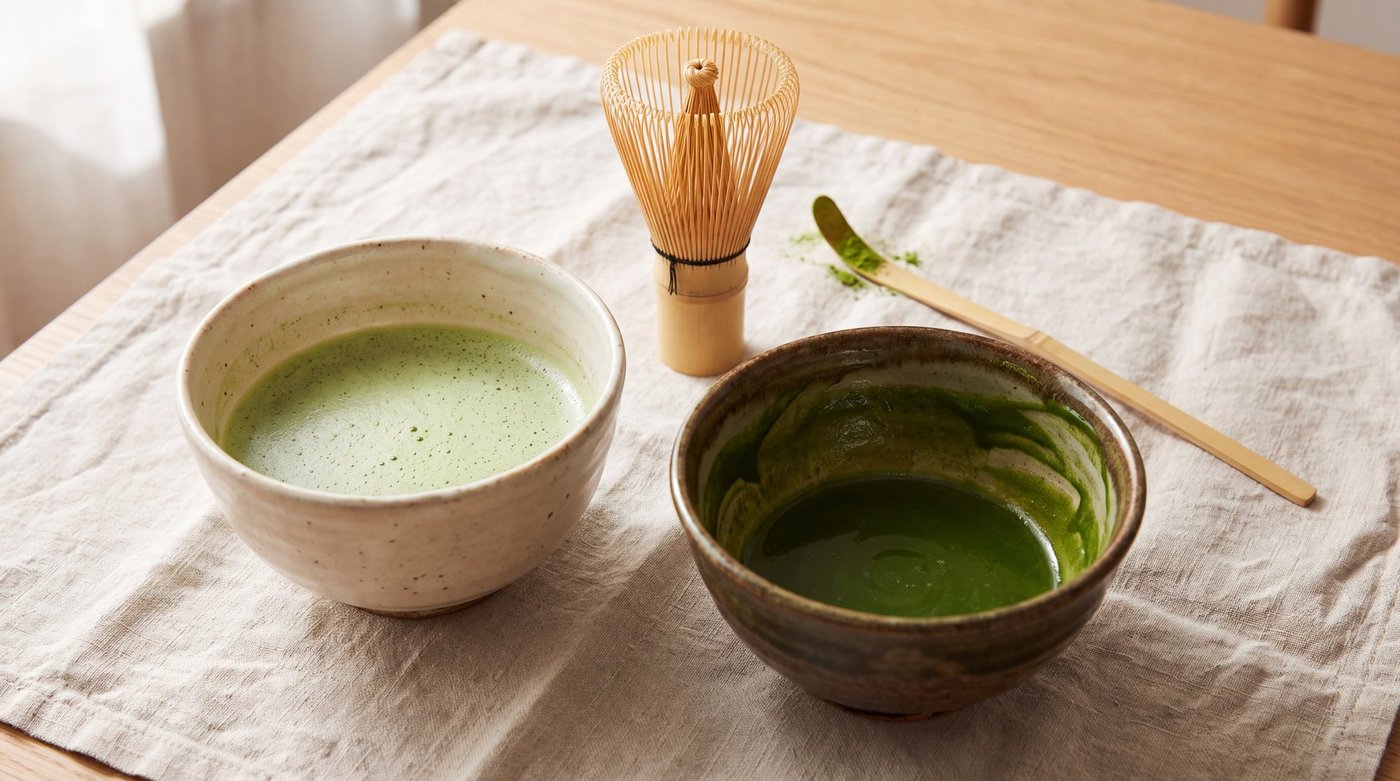
Usucha and koicha are two ways of preparing the same matcha. Usucha, “thin tea”, is 2 g of powder whisked with 60–70 ml of water into a fine froth. Koicha, “thick tea”, is 4 g kneaded with 30 ml of water into a smooth, glossy emulsion with no froth at all. What separates them is the ratio, the movement of the whisk and the taste.
Usucha: thin tea
Usucha is the matcha most people know: bright green, topped with a layer of fine froth and finished in a few sips. In Japan it is the way matcha is most often prepared.
The ratio is 2 g of matcha (two chashaku scoops) to 60–70 ml of water at 70–80 °C. Move the whisk fast in a “W”, just above the bottom of the bowl, for 15–20 seconds, until the surface turns evenly creamy. The taste is fresh and grassy, with a light bitterness the froth softens. Every step is in our traditional usucha recipe.
Koicha: thick tea
Koicha takes twice the powder and about half the water: 4 g of matcha to 30 ml of water at about 80 °C. Koicha is never whisked to a froth. First knead the powder into a smooth paste with half the water, then add the rest and keep kneading with a slow, circular movement, pressing the tines against the bottom.
Finished koicha looks like warm syrup or melted chocolate: thick, glossy, slowly running down the side of the bowl. Sweetness and umami lead, and there is less bitterness than such a concentration would suggest — provided the matcha is genuinely good. Koicha is the centrepiece of the tea ceremony, and one bowl is traditionally shared by several guests. The ratio and the order of the steps are in our koicha recipe.
The main differences
- Ratio. Usucha: 2 g to 60–70 ml of water. Koicha: 4 g to 30 ml, about four times as concentrated.
- Whisking. Usucha is whisked in a fast “W”; koicha is kneaded slowly, without drawing in air.
- Texture. Usucha is liquid and frothy; koicha is thick, smooth and has no froth.
- Taste. Usucha is lighter and grassier; koicha is concentrated, sweet and full of umami.
- Caffeine. Twice the powder means twice the caffeine. The figures are in the questions at the end, and there is more in our article on how much caffeine matcha has.
Which matcha for usucha, and which for koicha
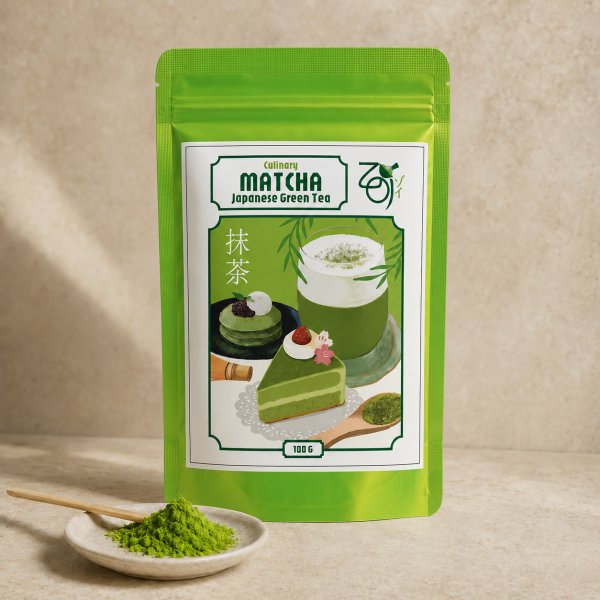
For both, only ceremonial matcha. With water alone, nothing hides the taste, and culinary matcha is deliberately stronger: as usucha it turns bitter, as koicha bitter and astringent.
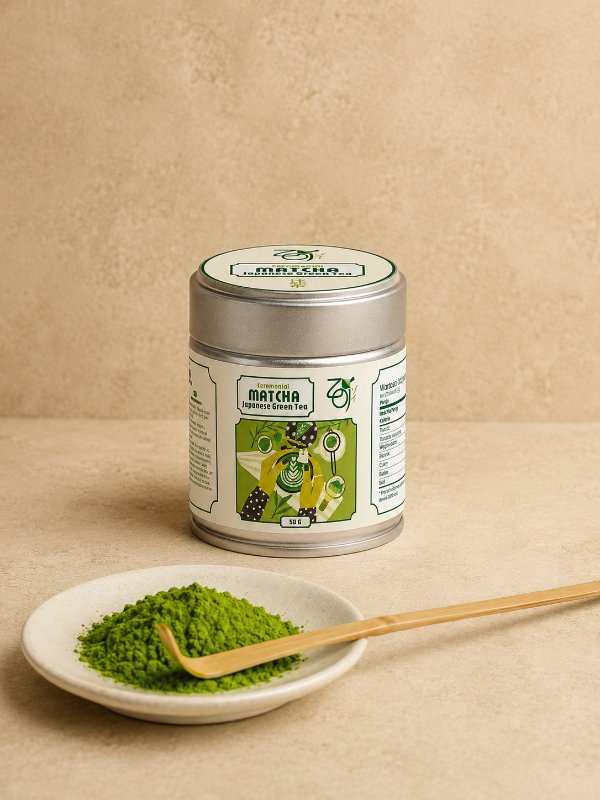
Koicha asks for more than usucha. At that thickness every flaw in the powder shows, so use the best matcha you have and always sift it — in a thick emulsion every lump can be seen and felt. To begin with, a 50 g tin is enough: 25 servings of usucha or 12 of koicha.
Which whisk and which bowl
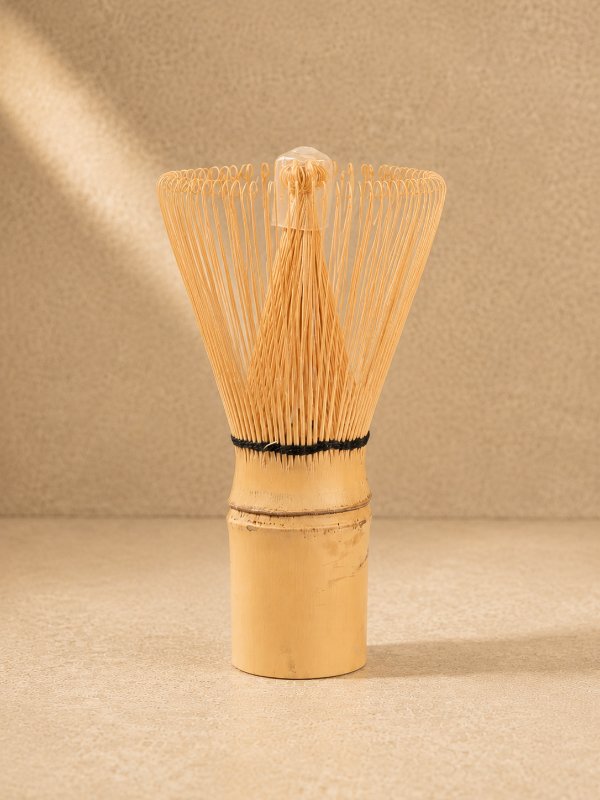
For usucha, a chasen with 100–120 fine tines works best and gives the finest froth. For koicha, a whisk with fewer, thicker tines is better, because fine tines break in the thick paste. If you only have one chasen, make it an all-rounder with 70–80 tines. We cover the details in how to choose a chasen.
The bowl should have a wide, flat bottom, because in both cases the whisk works close to it. Before you start, warm it with boiling water, pour the water out and wipe it dry — matcha holds its temperature longer in a warm bowl.
Which to start with
Usucha. It is easier, forgives small mistakes and lets you get to know the taste of a particular matcha. Koicha is an intensity worth working up to. If your first bowl is too strong, do not dilute it — next time start with 3 g to the same 30 ml of water and work up to 4 g.
The most common mistake is treating koicha as stronger usucha: more powder, less water and the same fast “W”. The result is a thick, bitter froth instead of a smooth emulsion. The second mistake applies to both: boiling water. After the kettle boils, wait three to four minutes for the water to drop to 70–80 °C.
You make both with the same set: a bowl, a chasen and a sieve. Start with everyday usucha, and reach for koicha once the taste of pure matcha no longer surprises you.
Frequently asked questions
What is the difference between usucha and koicha?
The ratio, the technique and the texture. Usucha is 2 g of matcha to 60–70 ml of water, whisked to a froth in a “W”. Koicha is 4 g to 30 ml of water, kneaded slowly into a thick emulsion with no froth.
What is usucha?
Usucha, or “thin tea”, is the basic form of matcha: powder whisked with a chasen and a little hot water into a bright green, frothy tea. It is how matcha is most often prepared in Japan.
Does koicha have more caffeine than usucha?
Yes, because it contains twice the powder. We put a 2 g serving of matcha at about 60–70 mg of caffeine, so a serving of koicha (4 g) has about 120–140 mg. In EFSA’s opinion, up to 200 mg in a single dose and up to 400 mg a day from all sources raise no safety concerns for healthy adults, and up to 200 mg a day during pregnancy and breastfeeding. Agree your own limits with your doctor.
Can I use culinary matcha for koicha?
It is not worth it. Culinary matcha is deliberately stronger and turns bitter and astringent at koicha strength. For koicha, as for usucha, use ceremonial matcha.
Is koicha whisked?
No. Koicha is kneaded with a slow, circular movement, without drawing in air. If froth appears on the surface, the whisk is moving too fast.
Where should I start: usucha or koicha?
With usucha. It is easier and lets you get to know the taste of matcha. Come to koicha later; if 4 g to 30 ml of water is too strong, use 3 g next time.