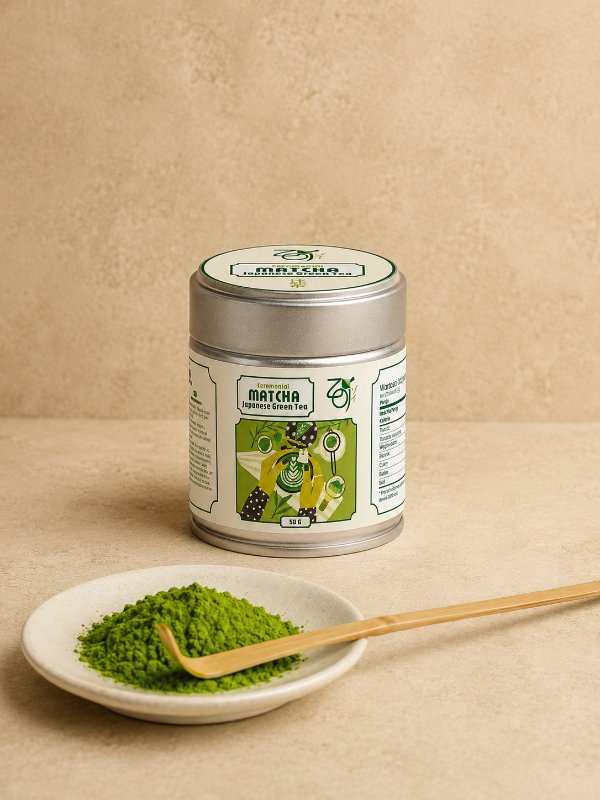
A 2 g serving of ZOI matcha has about 60–70 mg of caffeine, by our own figures: 30–35 mg per gram. In the examples of the European Food Safety Authority (EFSA), an espresso (60 ml) has about 80 mg. So a serving of matcha has a little less caffeine than coffee, and more than black tea.
Caffeine per gram, teaspoon and tablespoon of matcha
You drink the whole ground leaf, not an infusion, so all the caffeine in the powder ends up in the bowl. The easiest way is to count by the gram:
- 1 g of matcha: about 30–35 mg of caffeine.
- A level teaspoon (about 2 g): about 60–70 mg.
- 4 g, or two servings: about 120–140 mg.
- A level tablespoon (three level teaspoons, about 6 g): about 180–210 mg.
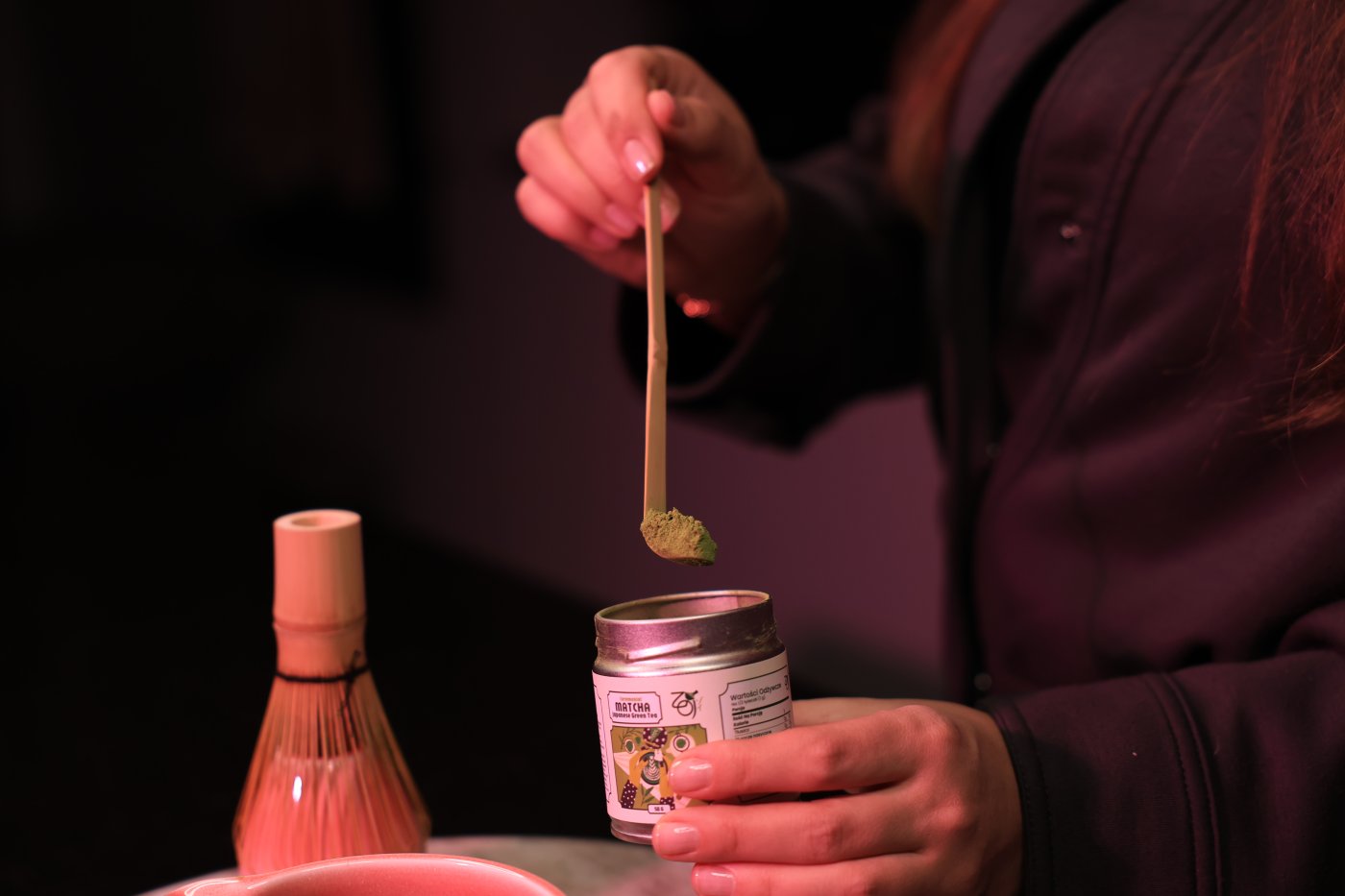
These are approximations for ZOI matcha, such as our ceremonial matcha: a 50 g tin makes 25 servings of 2 g. Spoons vary, so to be exact, weigh the powder. Matcha from other harvests may contain more or less caffeine.
Matcha compared with coffee and tea
EFSA gives these examples: filter coffee (200 ml) about 90 mg of caffeine, espresso (60 ml) about 80 mg, black tea (220 ml) about 50 mg. A 2 g serving of matcha falls between tea and espresso, and 4 g is more than a cup of filter coffee.
So matcha is not ‘stronger than coffee’. What else separates the two drinks is covered in our article on matcha versus coffee.
Caffeine in lattes and snacks
A latte has as much caffeine as the matcha you put in it: with 2 g of powder, about 60–70 mg, as milk adds none. In bakes and snacks, the caffeine is spread across the portions. The mix for our matcha and date energy balls holds 6 g of matcha for 16 balls, so about 11–13 mg of caffeine a ball; balls rolled in matcha carry a little more.
What about L-theanine?
Matcha also contains L-theanine, an amino acid found in larger amounts in leaves shaded before harvest, which is how matcha is grown. So L-theanine is in the cup. In 2011 EFSA assessed claims about its effect on cognitive function, psychological stress and sleep and found no cause-and-effect relationship.
Nor has it been confirmed that L-theanine changes how caffeine acts. Matcha’s caffeine counts towards your daily total like any other, and in the evening it acts just as coffee’s does.
How much caffeine a day: EFSA’s opinion
In its 2015 opinion, EFSA concluded that for healthy adults, up to 400 mg of caffeine a day and single doses of up to 200 mg raise no safety concerns. For pregnant and breastfeeding women, the figure is 200 mg a day. This is a scientific opinion on safety, not a recommendation of how much to drink.
Converted, 400 mg is about 11–13 g of ZOI matcha, and 200 mg about 6 g. But these figures cover caffeine from all sources: coffee, tea, cola, energy drinks and chocolate all add up with matcha. Agree your own limits with your doctor, not with a tea shop’s blog, and that includes pregnancy and breastfeeding.
Frequently asked questions
How much caffeine is in 1 g of matcha?
About 30–35 mg. A 2 g serving of ZOI matcha has about 60–70 mg, by our own figures.
How much caffeine is in a teaspoon of matcha?
A level teaspoon holds about 2 g, so about 60–70 mg. Spoons vary, so to be exact, weigh the powder.
How much caffeine is in 4 g of matcha?
About 120–140 mg, the same as two 2 g servings. That is more than a cup of filter coffee, which EFSA puts at about 90 mg.
How much caffeine is in a tablespoon of matcha?
A level tablespoon is three level teaspoons, so about 6 g and about 180–210 mg of caffeine. Matcha from other harvests may contain more or less.
Does L-theanine change how caffeine works?
That has not been confirmed, and no claim of that kind is authorised in the EU. When EFSA assessed claims about L-theanine’s own effect on cognitive function, psychological stress and sleep in 2011, it found no cause-and-effect relationship. Count matcha’s caffeine like any other.
How much matcha is 400 mg of caffeine?
About 11–13 g of ZOI matcha, and 200 mg is about 6 g. In EFSA’s 2015 opinion, up to 400 mg a day from all sources raises no safety concerns for healthy adults; for pregnant and breastfeeding women the figure is 200 mg. Agree your own limits with your doctor.