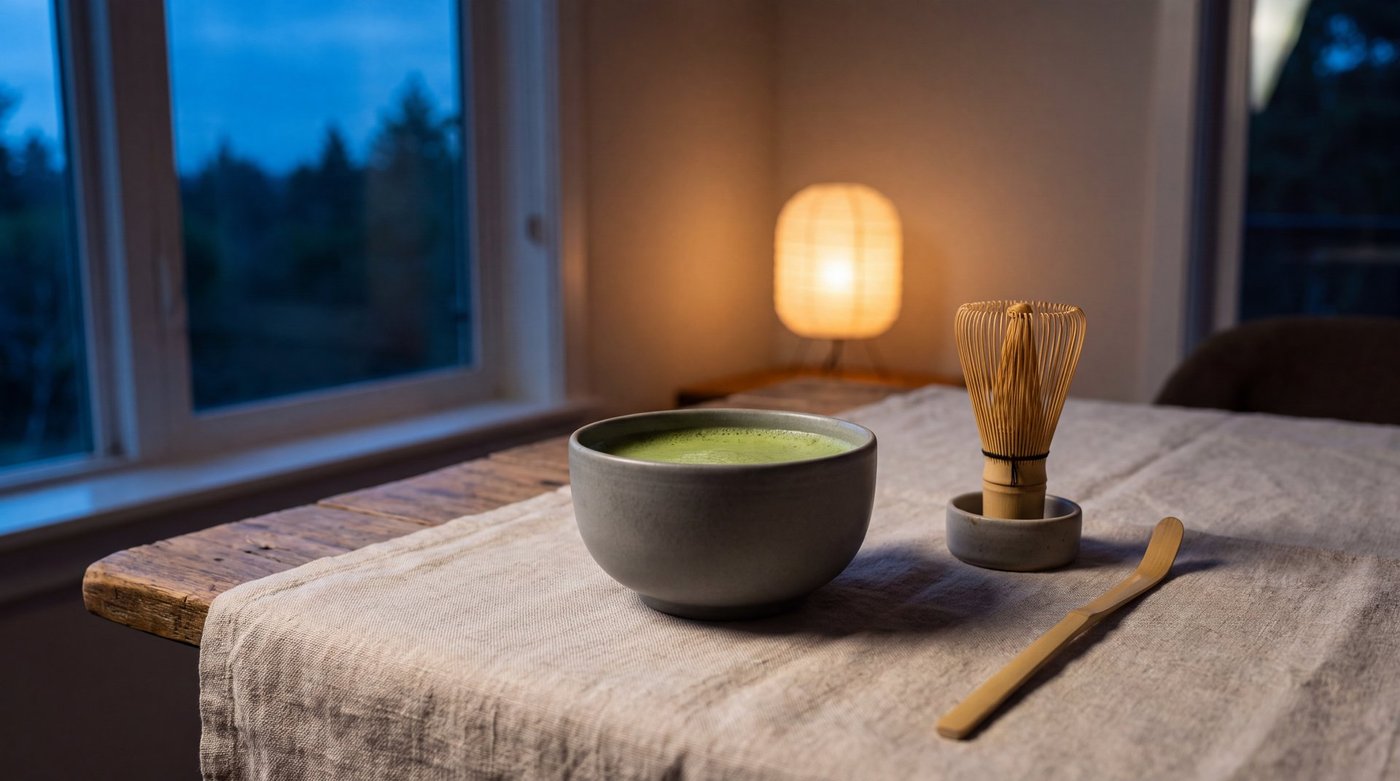
Matcha before bed works like an evening coffee: by our figures, a bowl made with 2 g of powder has about 60–70 mg of caffeine. In its 2015 opinion, EFSA found that as little as 100 mg of caffeine taken close to bedtime may make some adults take longer to fall asleep and sleep for less time. Whether an evening bowl bothers you depends on the serving, the time and how sensitive you are to caffeine.
How much caffeine is in an evening bowl
You drink the whole ground leaf, so all the caffeine in the powder ends up in your cup. The simplest way to count it is by the gram: 1 g of matcha has about 30–35 mg. We have set out the figures per teaspoon and tablespoon in our article on how much caffeine is in matcha.
- Usucha with 2 g. About 60–70 mg, a little less than an espresso (60 ml), which EFSA’s examples put at about 80 mg.
- Latte with 2–3 g. From 60 to 105 mg, depending on how much powder goes in. Milk neither adds caffeine nor takes it away.
- Koicha with 4 g. About 120–140 mg in one small bowl, which is more than the 100 mg EFSA’s opinion refers to.
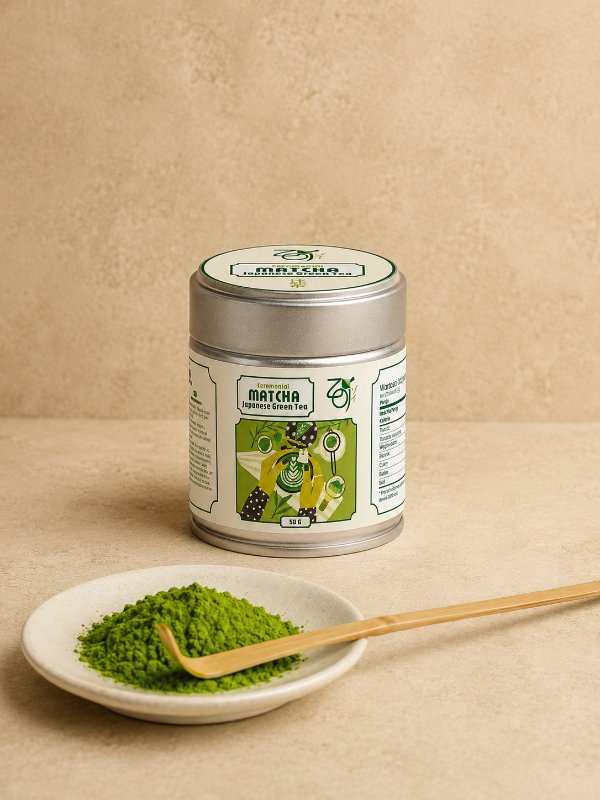
These are approximations for ZOI matcha, such as our ceremonial matcha in a 50 g tin. Matcha from other harvests may contain more or less caffeine.
What EFSA says about caffeine before sleep
In its 2015 opinion on the safety of caffeine, EFSA, the European Food Safety Authority, wrote that single doses of 100 mg may make some adults take longer to fall asleep and sleep for less time, particularly when taken close to bedtime. The same opinion found that single doses of up to 200 mg and up to 400 mg a day raise no safety concerns for healthy adults, and that in pregnancy the figure is 200 mg a day.
This is a scientific opinion on risk, not advice on how much to drink or when. The total counts too: an afternoon coffee, tea with dinner and an evening matcha all add up.
How long caffeine stays in your body
According to the same EFSA opinion, the half-life of caffeine in the blood of adults is about 4 hours on average, ranging from roughly 2 to 8 hours. After that time, half of the caffeine is still in your body. So for an average person, a 2 g bowl drunk four hours before bed still leaves about 30–35 mg, and noticeably more for someone who breaks caffeine down more slowly.
Caffeine is broken down more slowly in pregnancy: by the end of pregnancy, its half-life is three to four times longer, according to EFSA. We cover caffeine in pregnancy in more detail in our article on matcha during pregnancy and breastfeeding.
What about L-theanine?
Matcha contains L-theanine, an amino acid found in larger amounts in leaves that are shaded before harvest. EFSA assessed claims about its effect on sleep, psychological stress and cognitive function in 2011 and found no cause-and-effect relationship. Nor is there confirmation that L-theanine changes how caffeine acts.
In practice, in the evening the caffeine in matcha acts just like the caffeine in coffee. Do not count on anything else in the bowl to balance it out.
Matcha desserts and lattes count too
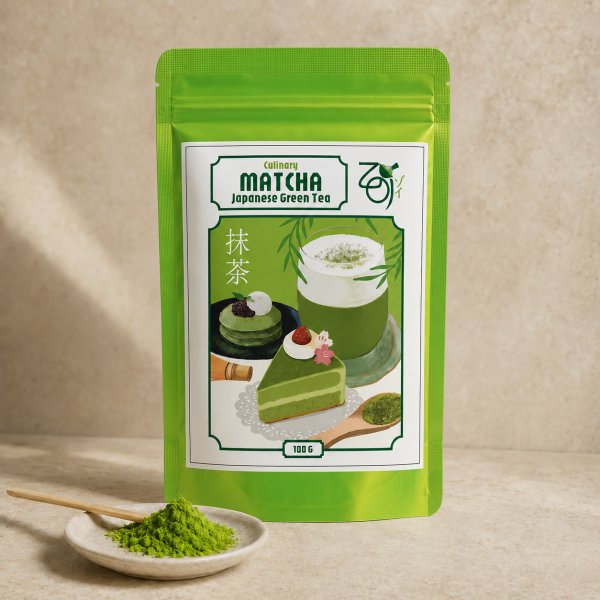
Caffeine does not disappear in a cake or in milk. Our matcha white hot chocolate uses 4 g of matcha for two mugs, so about 60–70 mg of caffeine in each, the same as a bowl of usucha. Desserts are usually made with culinary matcha, and it contains caffeine too: a serving of ice cream or cake has as much caffeine as the matcha that goes into it.
With children, this arithmetic matters even more. EFSA’s opinion describes the same effect on falling asleep and sleep duration in some children and adolescents at about 1.4 mg of caffeine per kilogram of body weight. For a child weighing 30 kg, that is about 42 mg, less than in one mug of that hot chocolate.
How to apply this to your own evening
The simplest point of reference is coffee. If a cup of coffee in the evening keeps you awake, a bowl of matcha with a similar amount of caffeine will do the same. The source of the caffeine makes no difference here; what counts is the amount and the time.
Caffeine rises with the serving: 1 g of matcha has half as much as 2 g, and a latte made with 3 g has half as much again as a 2 g usucha. The caffeine is in your cup whether the matcha is in water, in milk or in chocolate.
Matcha in the evening is not forbidden, but it is not a drink for sleep either. What counts is the serving, the time and your total caffeine for the day. How much caffeine suits you, and until what time, is something to settle with your doctor, not with a tea shop’s blog.
Frequently asked questions
Does matcha at night help you sleep?
There is no evidence that it does. Matcha contains caffeine, and when EFSA assessed claims about L-theanine and sleep in 2011, it found no cause-and-effect relationship.
How late can you drink matcha?
There is no single time that suits everyone. According to EFSA, the half-life of caffeine in adults is about 4 hours on average and as long as 8 hours in some people, so the caffeine from an afternoon bowl may still be working in the evening. Agree your own limit with your doctor.
Is matcha gentler than coffee in the evening?
Do not assume so. There is no confirmation that L-theanine changes how caffeine acts, so you count the caffeine in matcha just like the caffeine in coffee: what matters is the amount, not the source.
How much caffeine is in an evening matcha latte?
As much as is in the matcha you put in. A latte made with 2 g has about 60–70 mg of caffeine; one made with 3 g, about 90–105 mg. Milk neither adds caffeine nor takes it away.
Can I drink matcha in the evening during pregnancy?
In pregnancy, the figure in EFSA’s opinion is 200 mg of caffeine a day from all sources, and by the end of pregnancy caffeine is broken down three to four times more slowly. Talk to your doctor or midwife about an evening bowl.
Do matcha desserts contain caffeine?
Yes. The caffeine stays in the dessert, and a serving has as much caffeine as the matcha that goes into it. A mug of our matcha white hot chocolate has about 60–70 mg.