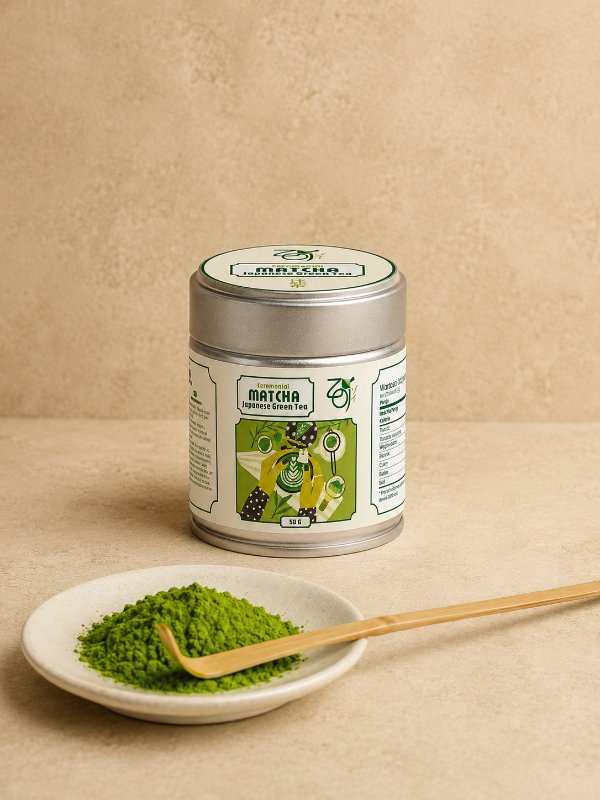
Preparing matcha takes less time than making coffee in a drip coffee maker. Even so, most of the first few cups turn out bitter or lumpy — not because the technique is difficult, but because there are three details that remain invisible until someone points them out.
What you’ll need
- 2 g of matcha — that’s roughly one heaped chashaku scoop or a level teaspoon.
- 60 ml of water at around 80°C – not boiling water.
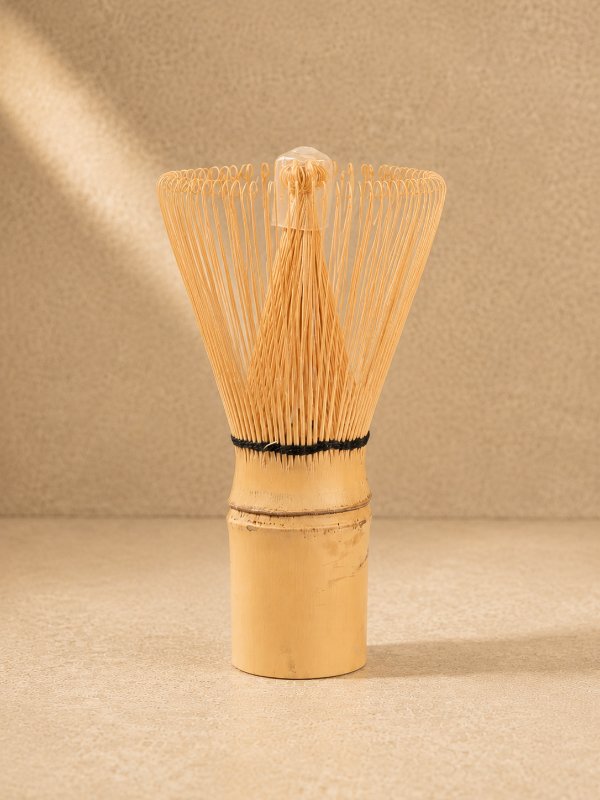
- A chasen — a bamboo whisk. A strainer and a wide-bottomed bowl are very helpful, but without a chasen there is no froth, just a suspension.
Step by step
1. Bring the water to the boil and let it rest. Boiling water straight from the kettle is 100°C and extracts bitterness from the leaves faster than you can whip up the foam. After boiling, wait three to four minutes — the water will cool down to around 80°C on its own. Without a thermometer: pour it once between two containers; this reduces the temperature by about ten degrees.
2. Sift the matcha into a cup. Powder ground to less than 10 microns becomes electrically charged and clumps together in the packet. A sieve breaks them up in a second. It’s tempting to skip this step — and that’s precisely why you end up with cups full of lumps at the bottom.
3. Pour in a little water and whisk it in. Start with just 10–15 ml. Spread the powder with a chasen slowly, as if making a paste. Only once you have a smooth base should you pour in the rest of the water.
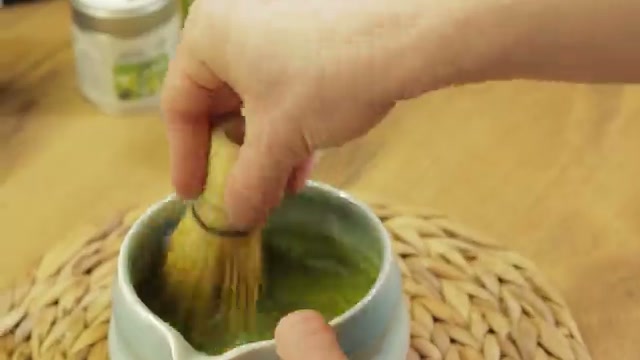
4. Whisk in a ‘W’ motion, not in circles. Keep your wrist relaxed, the whisk just above the bottom, and make vigorous ‘W’ movements for 15–20 seconds. Circles just mix the tea; the ‘W’ motion aerates it. The froth is ready when the large bubbles have disappeared and the surface becomes uniformly creamy.
5. Drink straight away. Matcha is a suspension, not an infusion — the powder settles after a few minutes. If you set the bowl aside, simply give it a stir before your next sip.
Three mistakes that ruin everything
- Water that’s too hot. This is the source of the opinion that ‘matcha is bitter’. It isn’t — but when brewed at 95°C, it is.
- Too much powder to too little water without adjusting your technique. Thick matcha (koicha) is a separate recipe requiring a different hand movement; it’s not just a ‘stronger, drier’ version.
- A wet chasen left with the bristles facing downwards. The bristles lose their shape and break when you whisk again. Dry it on a stand or with the bristles facing upwards.
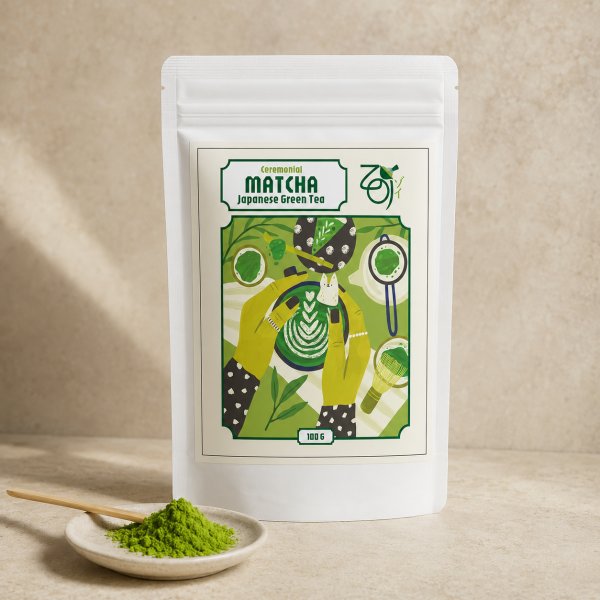
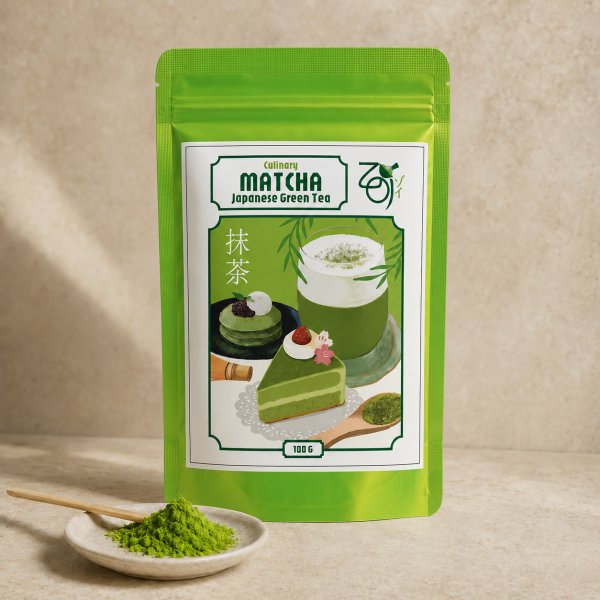
For drinking with water alone, choose ceremonial matcha – with this amount of water, nothing will mask the flavour. Culinary matcha is best reserved for lattes and cooking, where its stronger profile is an advantage, not a disadvantage.