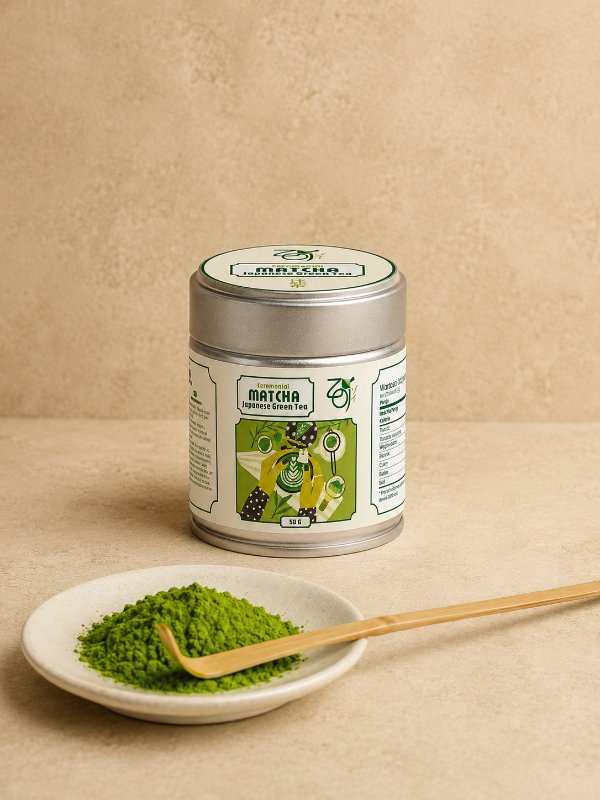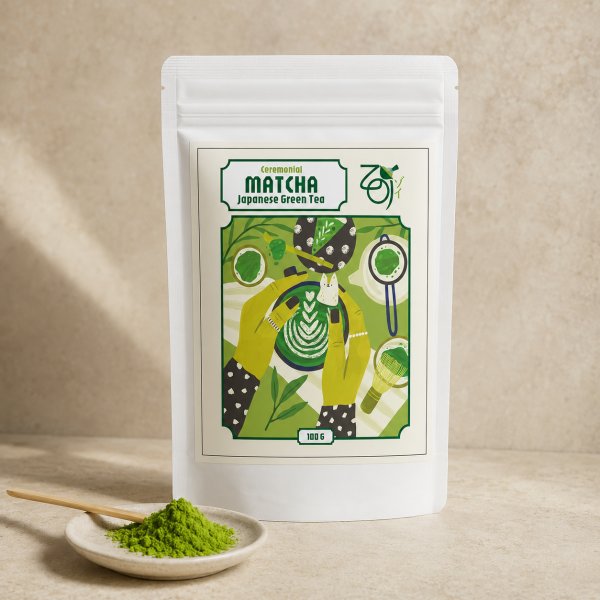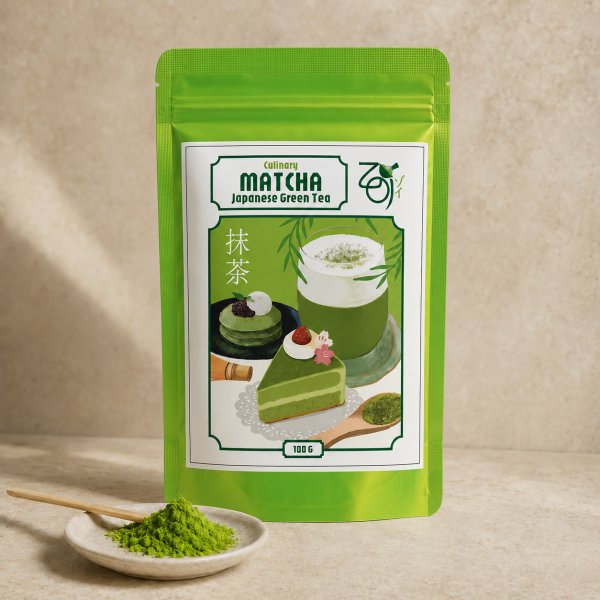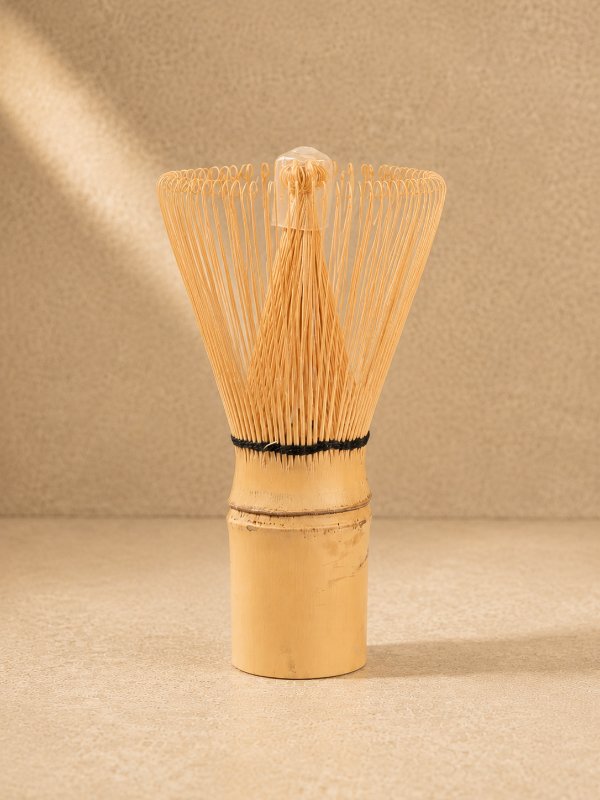
The difference between ceremonial and culinary matcha is not merely a marketing ploy. It stems from the harvesting, grinding and the intended use of the powder. If you mix them up, you’ll either end up paying over the odds or wasting good raw material.
Where does the difference come from?
Both come from the same tea bush and both are shaded before harvesting. They differ in three key areas.
Which harvest? Ceremonial matcha comes from the first harvest — the youngest leaves from the tips, richest in amino acids. Culinary matcha is usually from the second or third harvest, with older, tougher leaves containing more tannins.
What remains of the leaf. Only the leaf flesh is used for ceremonial tea, without the veins or petioles. More of these remain in culinary tea — hence its more dry, earthy profile.
How finely ground. Ceremonial tea is ground in stone mills, slowly, so as not to heat the powder. The particle size is less than 10 microns, which is why it dissolves smoothly. Culinary tea is ground more quickly and coarser.
How to tell them apart without a label
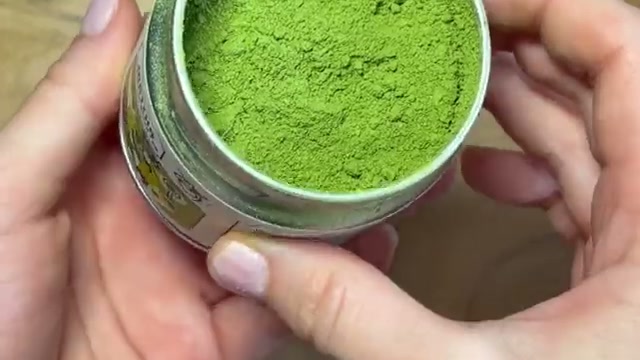
- Colour. Ceremonial matcha is an intense green, almost bright. Culinary matcha has an olive hue. A yellow or mustard shade is a sign that the powder is old or made from over-dried leaves — regardless of the name on the packet.
- Texture. Ceremonial matcha is silky and clings to your finger. Culinary matcha feels noticeably grainy.
- Smell. Fresh matcha smells sweet and grassy. A hay-like smell means it has been left for too long.
Which one for what
Ceremonial — for drinking with water alone. Usucha, koicha, matcha lattes where you want to taste the tea. Anywhere where nothing masks the flavour.
Culinary — for bakes, desserts, smoothies and anything with plenty of milk or sugar. Its stronger profile cuts through other ingredients, whilst ceremonial matcha will simply disappear in a cake mixture.
It works both ways. Culinary tea drunk with water will be bitter and astringent. Ceremonial tea in a brownie is a splurge that no one will notice.
Is it worth paying extra?
It depends on what you’re doing. If you drink matcha every day with water or a dash of milk — yes, the difference is clear and you don’t have to look for it. If you mainly bake, the extra cost goes towards ingredients that will soon be covered by butter and sugar.
The most common mistake is buying one large packet of ‘all-purpose’ matcha. There’s no such thing as all-purpose matcha — it’s a compromise that performs averagely in both uses. Two smaller packets work out better.
How to store both
Matcha loses its colour and aroma when exposed to light, heat and moisture. Store it in an airtight tin in the fridge, and take it out a few minutes before use to prevent condensation from forming inside. An opened packet is best used up within four to six weeks — after that, the colour fades and the flavour becomes flat.
Frequently asked questions
How does ceremonial matcha differ from culinary matcha?
It differs in terms of the harvest, the part of the leaf used, and the fineness of the grind. Ceremonial matcha comes from the first harvest, using only the leaf pulp, and is ground in stone mills to a fineness of less than 10 microns. Culinary matcha comes from a later harvest, using tougher leaves and a coarser grind.
Can I use ceremonial matcha for baking?
You can, but there’s no point. In a batter with butter and sugar, its mild, sweet flavour profile is completely lost. Culinary-grade matcha works better and costs less.
Is culinary-grade matcha suitable for drinking?
With just water, it will be distinctly bitter and astringent. With milk and a little syrup, it’s acceptable, but it’s not suitable for drinking on its own.
How can you tell if matcha is good?
By its colour and texture. An intense, almost vivid green and a silky powder that sticks to your finger. An olive or mustard shade indicates older leaves or stale powder.
How long can you keep opened matcha?
Four to six weeks, in an airtight tin in the fridge. After that, the colour fades and the flavour becomes flat.